Carmakers Are Bringing Back Buttons – Why Drivers Prefer Them
Introduction
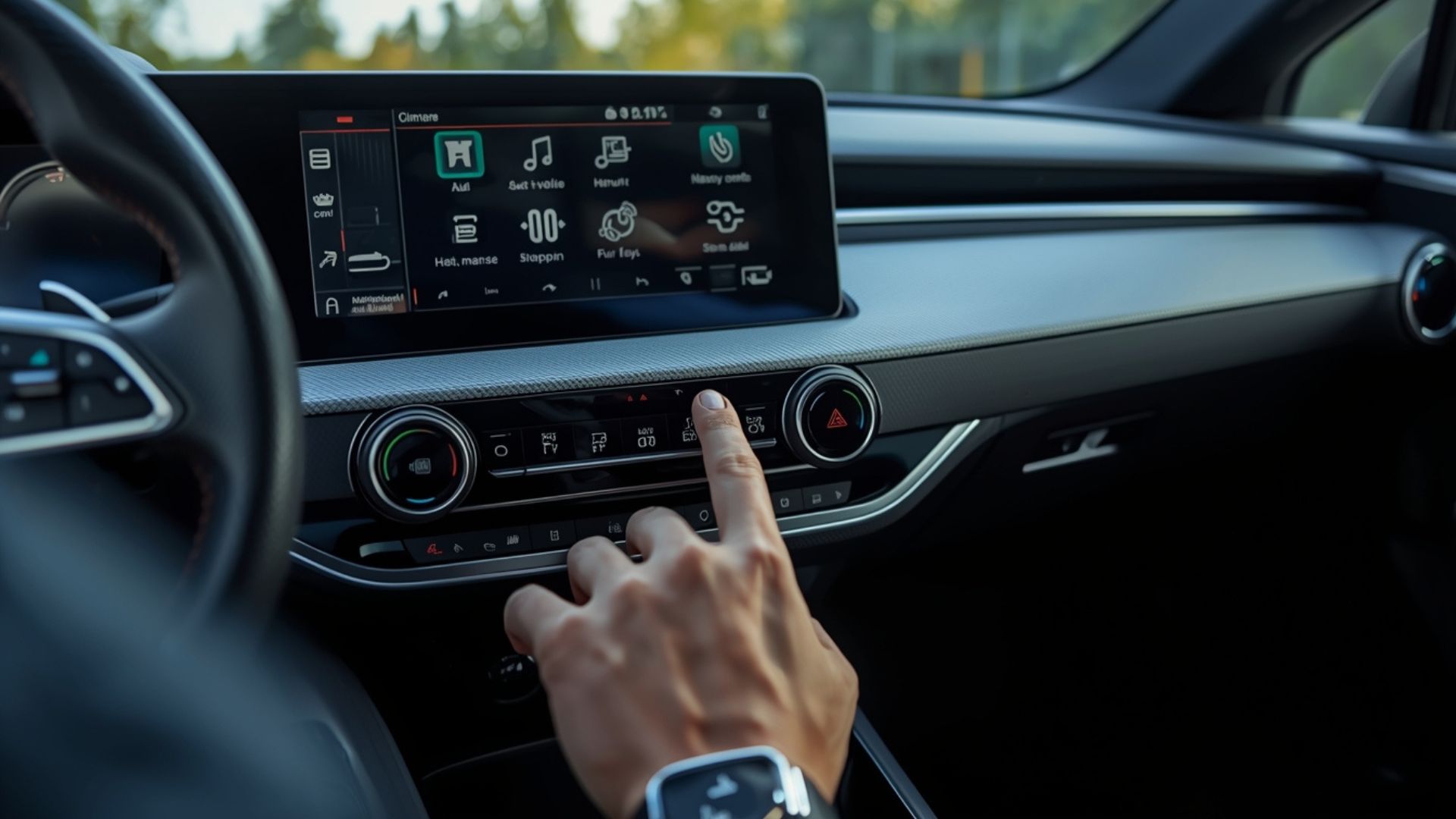
In recent years, carmakers bringing back buttons has become one of the biggest interior design changes in modern vehicles.
Over the past decade, car interiors changed dramatically. Touchscreens replaced traditional buttons and knobs, turning dashboards into large digital panels that looked more like tablets than vehicles. Automakers believed bigger screens and minimal physical controls would make cars feel modern and futuristic.
But something unexpected happened. Drivers didn’t like it as much as companies thought they would.
Instead of convenience, many drivers experienced frustration. Adjusting the AC while driving suddenly required navigating multiple menus. Changing volume or turning on seat heating meant taking eyes off the road.
Now, after years of complaints and safety concerns, many carmakers are reversing course. Physical buttons are making a comeback — and drivers everywhere seem relieved.
For car owners trying to find reliable workshops, service options, or trusted automotive advice, platforms like Zilauto are becoming increasingly useful. Instead of searching randomly for mechanics or service centers, drivers can explore verified workshops, compare services, and book appointments easily. If you’re looking for car care tips, service guidance, or workshop listings, you can explore the Zilauto platform to discover trusted automotive solutions and expert insights.
Quick Answer
Yes, car manufacturers are bringing back physical buttons in cars. After years of relying heavily on touchscreen controls, many automakers are reintroducing physical knobs and switches for frequently used features like climate control, volume, and driving modes. The change comes after driver feedback and safety studies showed that touch-only controls can be distracting and harder to use while driving.
The trend of carmakers bringing back buttons is growing as drivers demand safer and easier-to-use controls.
Background: How Cars Became Touchscreen Dominated
The shift toward touchscreen-heavy interiors started around the early 2010s. Automakers wanted to simplify dashboards and make interiors look more premium and futuristic.
Large infotainment screens became a major selling point. Companies believed fewer buttons meant cleaner design and a more tech-forward experience.
Several brands pushed this concept aggressively. Vehicles started removing physical controls for:
-
Climate control
-
Audio volume
-
Seat heating
-
Driving modes
-
Navigation shortcuts
Instead of buttons, these functions were moved into digital menus.
One of the biggest influences in this shift was the minimalist interior philosophy popularized by electric vehicles and technology-focused brands. Other manufacturers followed the trend quickly to remain competitive.
For a while, bigger screens became a marketing highlight. Cars advertised 12-inch, 14-inch, even 17-inch infotainment displays.
But as drivers spent more time using these systems, the drawbacks became obvious.
Key Highlights of the Button Comeback
Several trends are now pushing automakers to bring physical controls back:
-
Driver safety concerns
-
Customer complaints about usability
-
Regulatory pressure in some markets
-
Better ergonomics for common functions
Industry experts now recognize that not every function should be controlled through a touchscreen.
Many manufacturers are redesigning dashboards to combine digital displays with tactile controls.
Instead of removing screens completely, the new approach focuses on hybrid interiors — screens for advanced features and buttons for frequently used functions.
Design and Interior Changes in Modern Cars
The return of buttons does not mean cars are going backward in technology. Instead, designers are trying to strike the right balance between digital and physical controls.
In newer vehicle interiors, automakers are prioritizing three principles:
1. Frequently Used Controls Should Be Physical
Functions drivers use constantly are now being given dedicated buttons again.
Examples include:
-
Climate temperature adjustment
-
Fan speed
-
Volume control
-
Hazard lights
-
Defrosters
These are easier to locate without looking.
2. Screens Remain for Advanced Features
Touchscreens still make sense for certain functions:
-
Navigation maps
-
Smartphone integration
-
Media browsing
-
Vehicle settings
-
Camera views
These features are used less frequently while driving, so touchscreen interaction works better here.
3. Ergonomics Are Becoming a Priority Again
Car designers are realizing that tactile feedback matters. Buttons allow drivers to operate controls without taking their eyes off the road.
Knobs, dials, and switches provide physical confirmation that a command has been executed.
Touchscreens, on the other hand, require visual attention.
This difference is becoming central to interior design philosophy again.
Real World Driving Impact
The biggest advantage of physical buttons appears when drivers are actually on the road.
When using a touchscreen for basic controls, drivers must:
-
Look at the screen
-
Locate the menu
-
Tap the correct area
-
Confirm the action
Even a simple adjustment like changing AC temperature can take multiple seconds of attention.
With physical controls, drivers can rely on muscle memory.
After driving the car for a few days, most drivers can adjust climate or volume without even looking.
Safety researchers have found that touch-only interfaces can increase distraction time. Even small distractions can affect reaction times when driving at highway speeds.
This is one of the main reasons many manufacturers are reconsidering fully digital interiors.
Comparison: Touchscreen Only vs Physical Controls
| Feature | Touchscreen Controls | Physical Buttons |
|---|---|---|
| Ease of use | Can require multiple steps | Usually single action |
| Driver distraction | Higher | Lower |
| Learning curve | Requires menu familiarity | Intuitive |
| Design aesthetics | Modern and minimal | Functional and tactile |
| Reliability | Depends on software | Mechanical simplicity |
The ideal solution now appears to be a combination of both systems rather than choosing one exclusively.
Market Shift: Carmakers Changing Strategy
Several automakers have already started moving away from touch-only dashboards.
New vehicle models increasingly feature:
-
Climate control knobs returning
-
Dedicated volume controls
-
Steering wheel buttons for essential functions
-
Simplified infotainment layouts
Automotive designers are also receiving feedback directly from customer surveys and usability studies.
Drivers consistently report that physical controls feel more natural and easier to use while driving.
Some industry awards and safety organizations have also begun evaluating vehicle interfaces based on usability.
This shift is encouraging manufacturers to rethink interior layouts.
This shift isn’t based only on driver complaints. Industry experts and automotive media have also highlighted how touchscreen-heavy dashboards increased distraction in everyday driving. Even major publications have reported that manufacturers are now reconsidering touchscreen-only layouts. A recent NDTV Auto report explains why global brands are reintroducing physical buttons for essential controls instead of relying entirely on touchscreens.
Price and Market Context
Interestingly, adding physical controls does not necessarily increase vehicle cost significantly.
In fact, large touchscreens can sometimes be more expensive due to display hardware and software development.
Physical switches and knobs are relatively inexpensive and durable.
However, modern cars still combine both systems. Premium vehicles typically feature:
-
Large infotainment displays
-
Digital instrument clusters
-
Select physical controls for critical functions
This hybrid design is becoming the new standard across many segments.
Pros and Cons of Bringing Back Buttons
Pros
-
Easier to use while driving
-
Reduced driver distraction
-
Faster access to common functions
-
Tactile feedback improves usability
-
Better ergonomics
Cons
-
Slightly less minimal interior design
-
More dashboard components
-
Some buyers still prefer fully digital layouts
Overall, most drivers appear to prefer the balance of physical and digital controls rather than eliminating buttons completely.
Verdict
The return of physical buttons in cars reflects an important lesson for the automotive industry: technology should improve usability, not complicate it.
While touchscreens offer flexibility and modern design, removing all physical controls proved impractical for everyday driving.
Automakers are now recognizing that drivers value simplicity, safety, and intuitive interfaces.
By combining digital displays with physical controls, modern vehicles can offer both advanced technology and a better driving experience.
Conclusion
Car interiors will continue evolving as technology advances, but the recent return of physical buttons shows that design trends sometimes need correction.
Drivers ultimately want systems that work naturally while they focus on the road.
Touchscreens will remain a key part of future vehicles, but physical controls are unlikely to disappear again anytime soon.
For many drivers, the comeback of buttons is a welcome change — bringing back practicality in an increasingly digital automotive world.
FAQs
Why are carmakers bringing back physical buttons?
Many drivers found touchscreen-only controls difficult and distracting while driving. Physical buttons make frequently used functions easier to operate without taking eyes off the road.
Are touchscreens disappearing from cars?
No. Touchscreens will still be used for navigation, media, and advanced settings. Automakers are simply reintroducing buttons for common controls.
Are physical buttons safer than touchscreens?
Generally, yes. Physical buttons allow drivers to rely on muscle memory, reducing the need to look away from the road.
Do drivers prefer buttons or touchscreens?
Most drivers prefer a combination of both — screens for advanced features and physical controls for everyday functions.
Will future cars still have buttons?
Many new models are already bringing them back, suggesting that physical controls will remain part of car interiors for the foreseeable future.
Comments